

12 Oct 2026
How Many Times Can a Gas Valve Cycle?


In previously published technical literature on commercial gas controls, Resideo highlighted an interesting figure: in certain high-demand applications, particularly commercial cooking equipment, gas control systems may experience 100,000 to 200,000 operating cycles per year. This does not mean that every commercial appliance reaches the same number of cycles, nor does it represent a fixed service life for all gas valves. However, it does raise an important point: when evaluating control components in commercial kitchens, we should consider not only “how many years has it been in service?” but also “how many times has it operated?”
One Cycle Is Essentially One Operating Sequence
Using a typical temperature-control process as an example, when the temperature of an oven, griddle, or other gas-fired appliance drops, the thermostat or temperature-control system generates a demand for heat and the gas system begins supplying fuel. Once the required temperature condition is reached, the gas supply is stopped or adjusted.
This repeated process—from a call for heat and system activation to the end of the heating period—forms part of the appliance's operating cycle. The durability of components under repeated operation is commonly discussed in terms of Cycle LifeNote 1.
However, the definition of one cycle may differ depending on the gas valve, thermostat, and overall control architecture. Therefore, if an appliance starts and stops 100 times a day, it does not necessarily mean that every internal component performs exactly 100 identical operating cycles.
The more important point is:
Operating correctly once may be easy, but maintaining stable performance after tens of thousands of repeated operations—or even more—is where durability truly matters.
Why Does This Matter More in Commercial Kitchens?
A household oven may only be used once or twice a day, but restaurant equipment operates under very different conditions.
From food preparation through the end of dinner service, ovens, griddles, fryers, and other appliances may operate continuously for many hours. While maintaining temperature, the control system may repeatedly activate, stop, and restart.
Resideo's technical literature notes that certain high-demand commercial cooking applications may accumulate 100,000 to 200,000 cycles per year, and that such frequent cycling may accelerate deterioration of gas control components. The document further suggests that when an appliance may experience approximately 100,000 cycles annually, maintenance inspections should be performed more frequently.
The most important takeaway is not the figure of “200,000 cycles” itself, but rather this:
The operating intensity of commercial equipment can sometimes be better understood by the number of cycles it performs, rather than simply by its age.
What Is Being Stressed During Repeated Cycling?
Take a gas valve as an example. Every opening and closing action involves movement of internal components. The Valve SeatNote 2, which plays an important role in closing and sealing the gas flow path, must continue to maintain the required sealing and control performance even after prolonged repeated operation.
If the appliance uses SolenoidNote 3 control, each energizing and de-energizing action also involves electromagnetic and mechanical movement. In addition to the number of cycles, coil energization time, ambient temperature, and actual operating load may also affect long-term performance.
The thermostat is another important part of the operating cycle. It senses or determines temperature demand and allows the system to decide when heating should begin and when it should stop. From the perspective of the complete appliance, gas valves, thermostats, ignition controls, and safety controls do not operate independently; they work together as an integrated control system.
Robertshaw's current Garland commercial cooking controls cross-reference includes BJWA thermostats, gas solenoid valves, gas valves, pilot burners, ignition controls, and other replacement components. Information from this type of service and replacement market also illustrates that inspection and replacement of control components are a normal part of the life cycle of commercial cooking equipment.
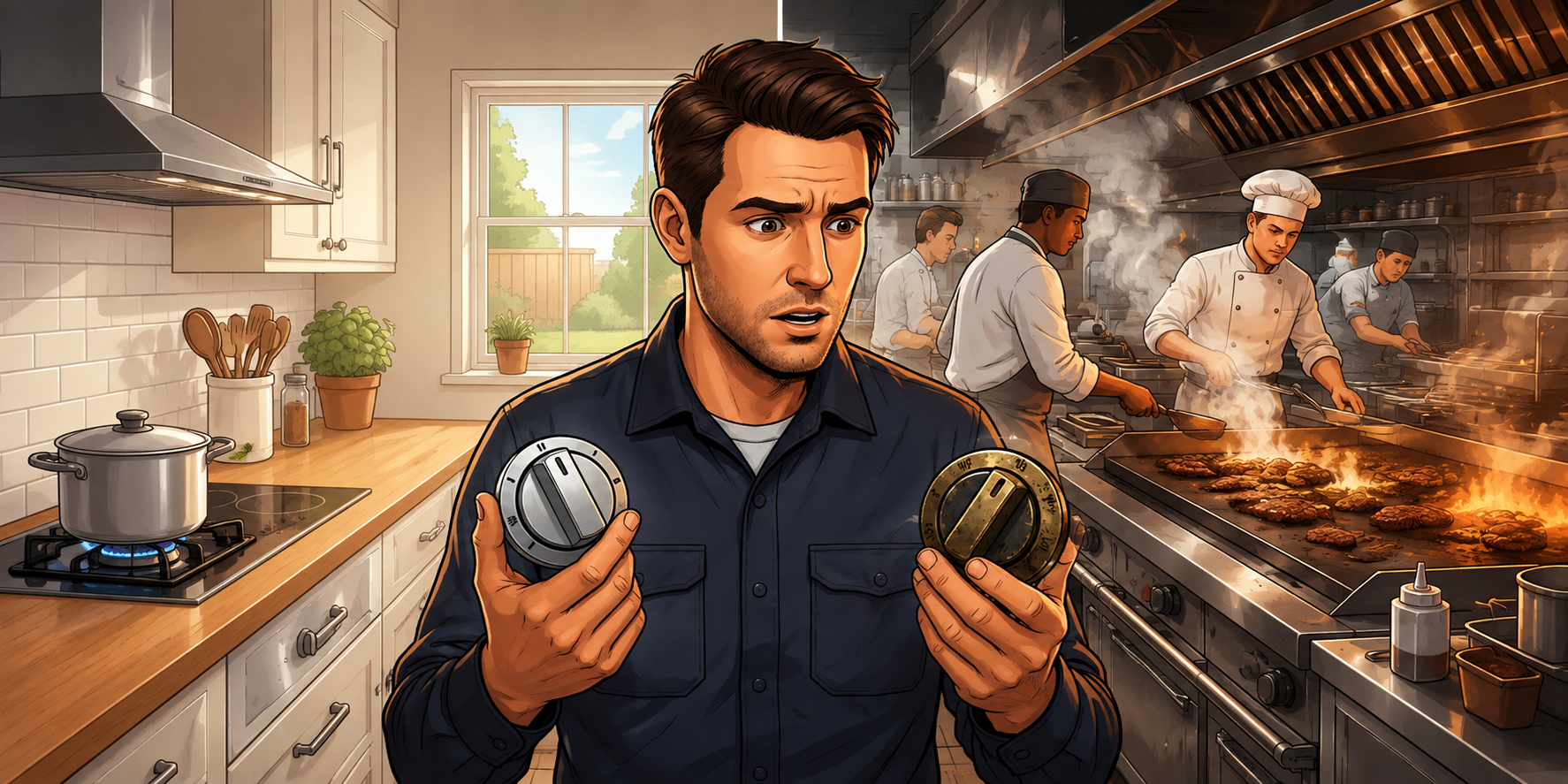
Cycle Count Is Not the Only Challenge—So Is the Kitchen Environment
Even if two gas valves have completed the same number of operating cycles, their actual condition may not necessarily be the same. The reason is simple: a commercial kitchen is not a laboratory.
Equipment may be continuously exposed to high temperatures, moisture, grease, dust, and cleaning chemicals. Resideo's technical literature also specifically notes that water, dirt, chemicals, and heat may cause damage or deterioration to gas control components.
Therefore, when discussing Cycle Life, the question should not simply be “how many times can it open and close?” Operating temperature, installation location, frequency of use, and environmental conditions should also be considered.
This is also why Preventive MaintenanceNote 4 is particularly important. There is no single inspection interval suitable for every appliance. Maintenance planning should instead be based on the equipment manufacturer's requirements, actual operating environment, and intensity of use.
Beyond “How Many Years?” Ask One More Question
In the design and application of gas control systems for commercial kitchen equipment, Alpha Brass Controls has extensive experience with gas valves, thermostats, ignition controls, and safety control products. When selecting and applying these components, we consider not only whether the specifications meet the required operating conditions, but also factors such as operating frequency, ambient temperature, control method, and expected maintenance conditions.
Cycle Life cannot be explained by a single number, nor should the test results of one product be directly used to predict the service life of another gas valve. The next time you evaluate a gas-fired commercial appliance, in addition to asking, “How many years can this gas valve last?” it may also be useful to ask:
“How many operating cycles is it expected to complete during those years?”
Starting from this perspective may provide a clearer understanding of the actual operating conditions faced by control components in commercial kitchens.
Technical Terms
1. Cycle Life | Operating Cycle Life
The ability of a component to maintain specified functions or performance after undergoing a defined number of repeated operating cycles under specified test and operating conditions. The definition of one cycle and the acceptance criteria may vary depending on the product and applicable test standard.
2. Valve Seat | Valve Sealing Seat
An important internal structure associated with valve closure and sealing. The actual design varies depending on the gas valve, and its sealing condition affects gas-tight performance when the valve is closed.
3. Solenoid | Electromagnetic Coil / Actuation Mechanism
A control mechanism that uses an energized coil to generate a magnetic force and actuate internal valve components. It is commonly used in gas solenoid valves and other electrically controlled gas components.
4. Preventive Maintenance | Scheduled Preventive Maintenance
Inspection or maintenance performed before equipment failure occurs, based on manufacturer requirements, operating frequency, environmental conditions, and equipment condition, with the aim of reducing the risk of unexpected downtime or failure.
References
2. Resideo — VR8300A,C Continuous Pilot Combination Gas Control
3. Resideo — VR8245 and VR8345 Electronic Ignition Gas Controls
4. Robertshaw — Garland Restaurant Cooking Controls Cross Reference
#GasValve #GasThermostat #CommercialKitchen #CommercialCookingEquipment #CycleLife #CommercialCooking #PreventiveMaintenance #GasControl #AlphaBrassControls